
 English
 русский
 Español
 عربى
عربى
Content
- 1 What Is ACM Material Made Of?
- 2 Key ACM Material Properties You Should Know
- 3 PE Core vs FR Core: How Core Choice Changes ACM Material Properties
- 4 Fire Ratings and Their Impact on Material Selection
- 5 ACM vs Solid Aluminum: What the Properties Mean in Practice
- 6 How ACM Material Properties Affect Fabrication and Installation
- 7 Choosing the Right ACM Panel for Your Project
When a facade contractor compares ACM panels for a retail fascia or a high-rise cladding project, the conversation usually starts with price and color. It should start with material properties instead. Aluminum composite material, commonly called ACM, is a sandwich panel made of two thin aluminum skins bonded to a polymer or mineral-filled core. Its performance in a real building depends on how well those layers work together.
The practical conclusion up front: ACM earns its reputation not from any single standout value but from a combination of low weight, high flatness, adequate stiffness, and predictable thermal movement. The core type, polyethylene or fire-retardant, then determines how far that combination can go within building-code limits.
What Is ACM Material Made Of?
ACM panels are produced by bonding a continuous core layer between two coils of aluminum skin, typically 0.2 mm to 0.5 mm thick. Total panel thickness ranges from 3 mm to 6 mm, with 4 mm the most common choice for external cladding. The core is either low-density polyethylene (PE) for general use or a mineral-filled, fire-retardant compound for panels that must satisfy stricter combustion requirements.
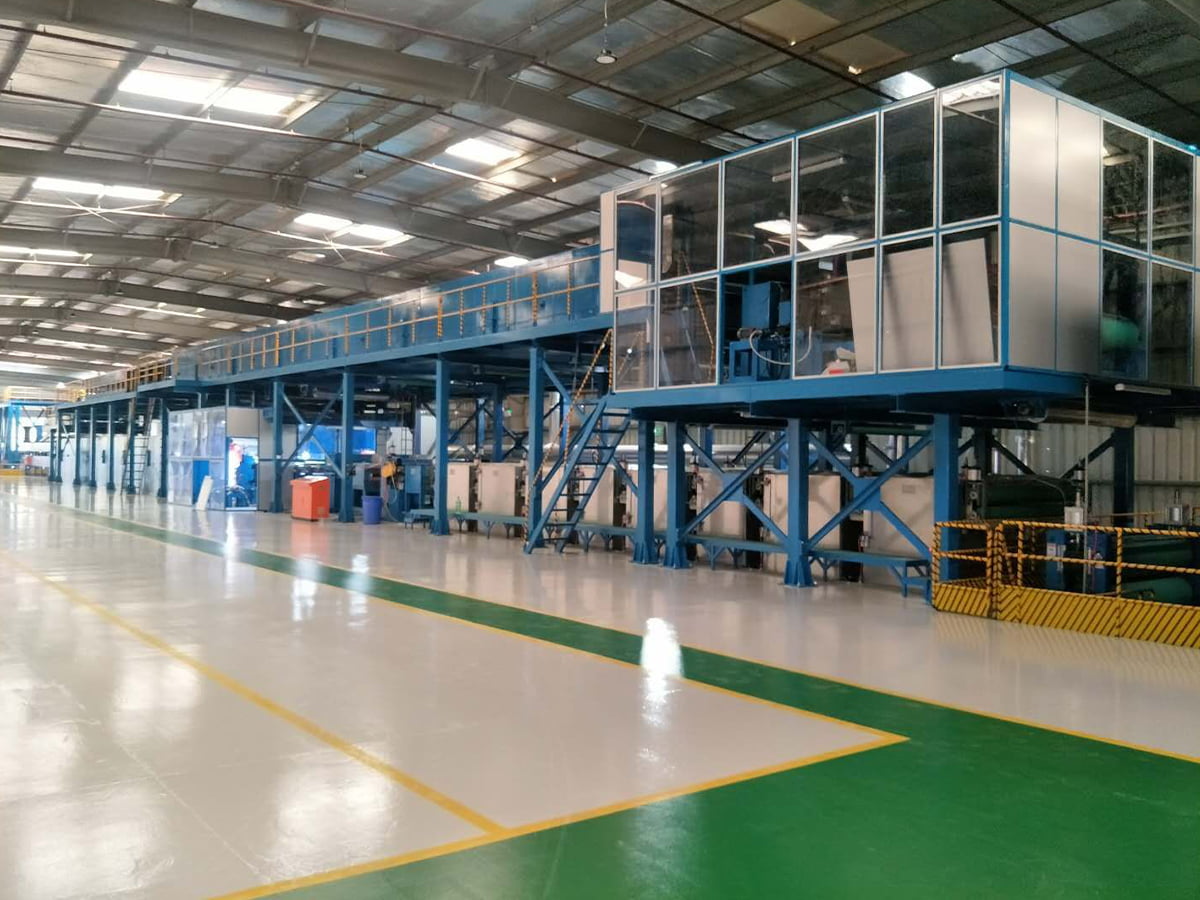
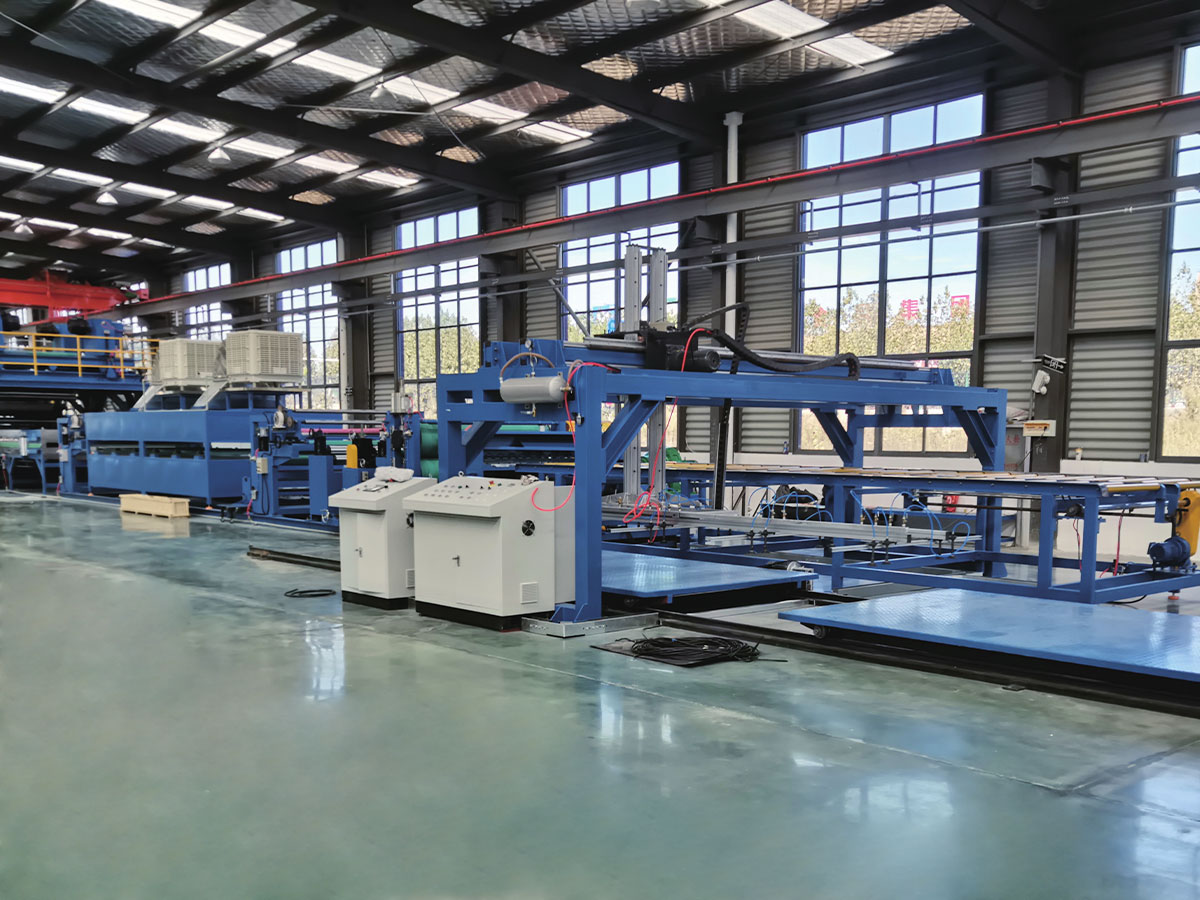
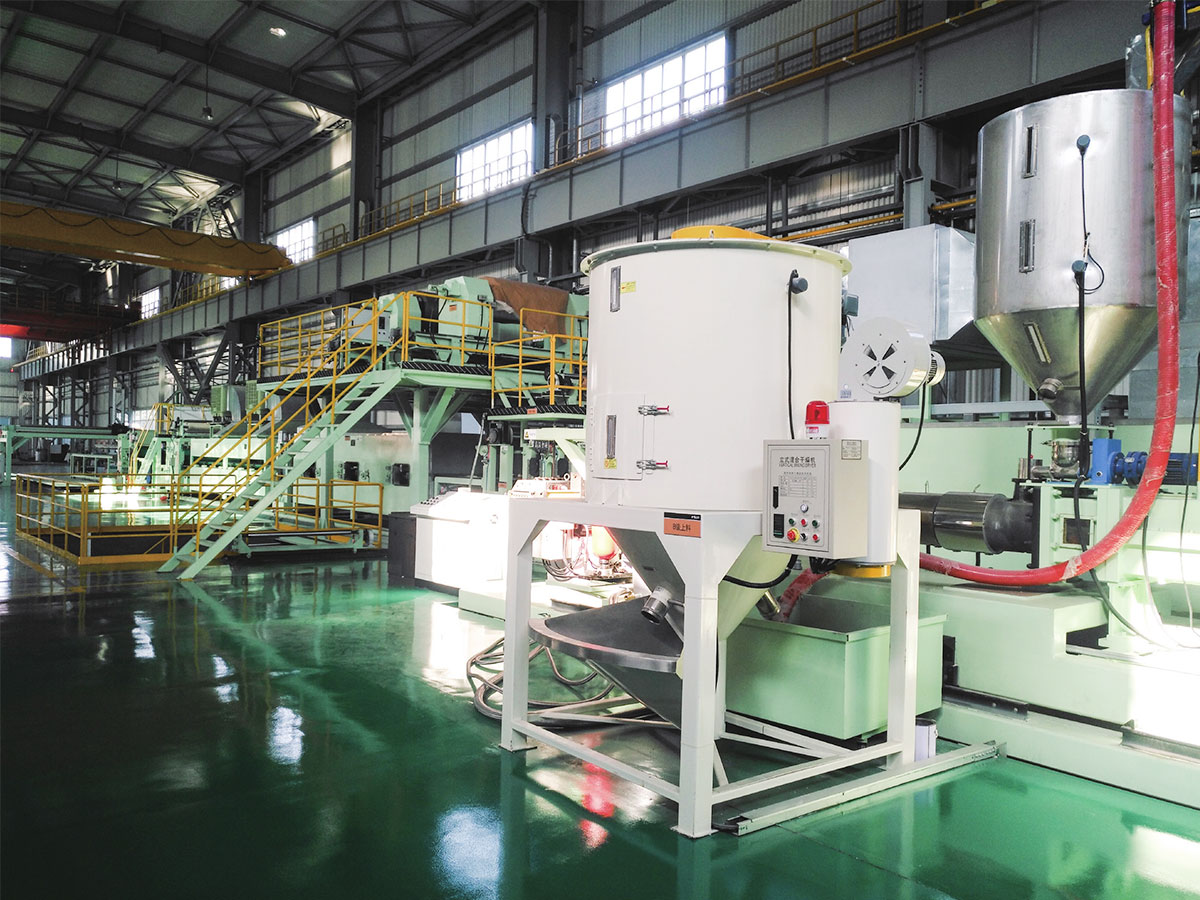
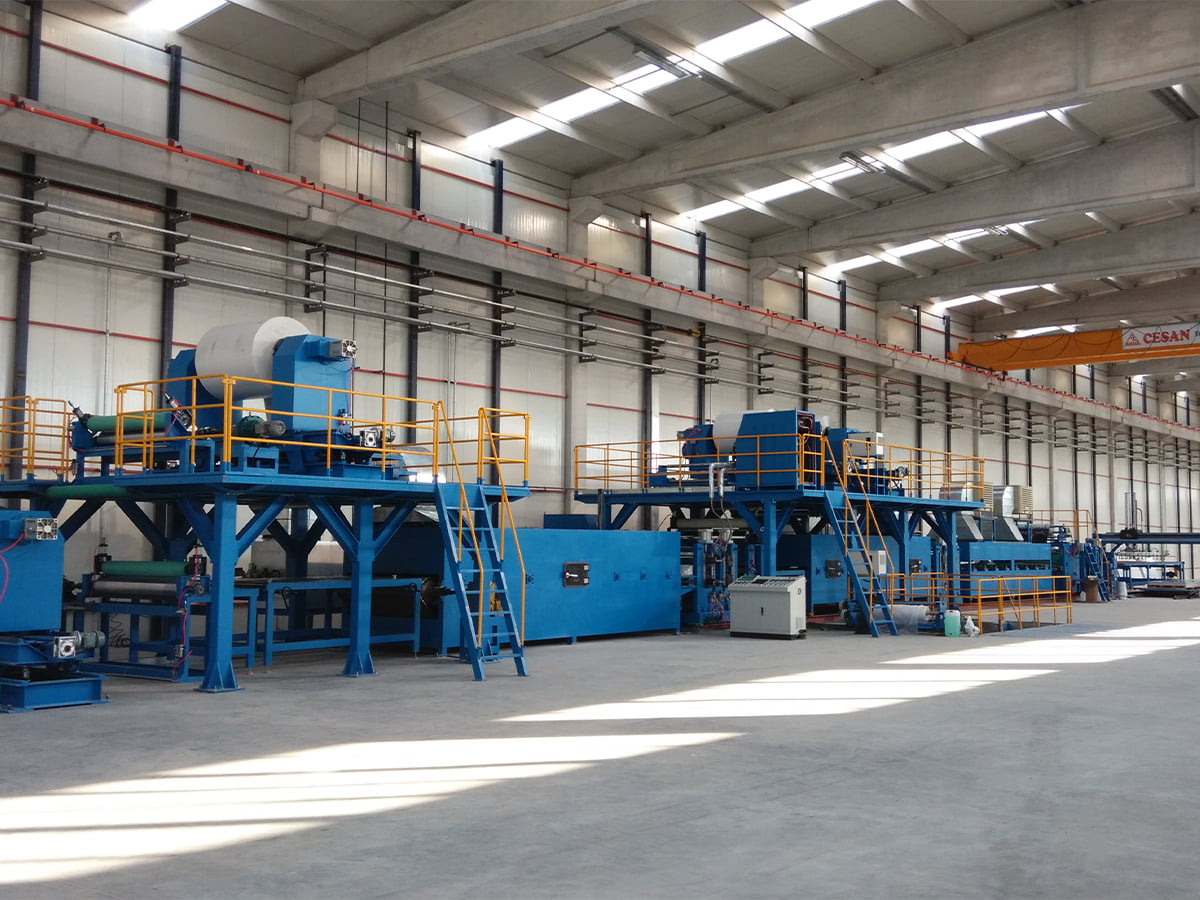
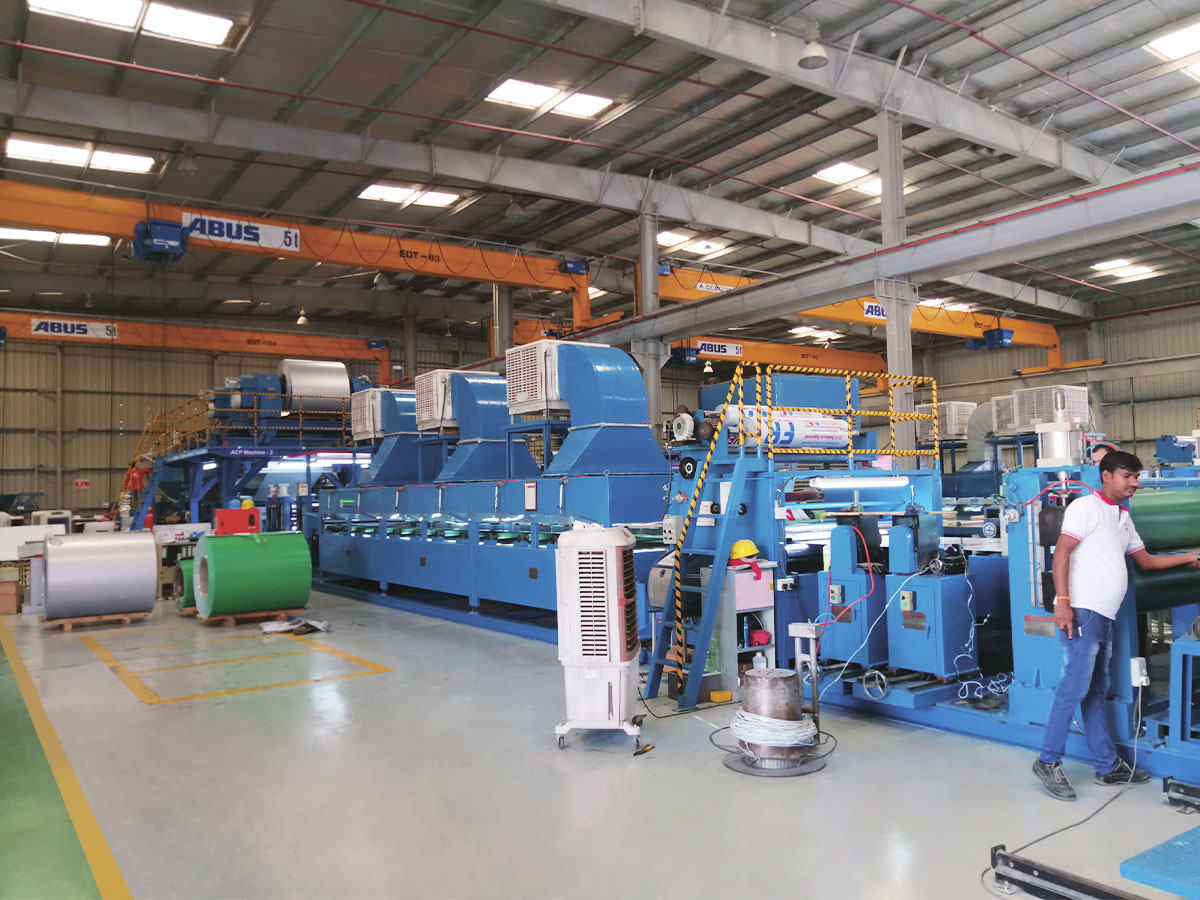
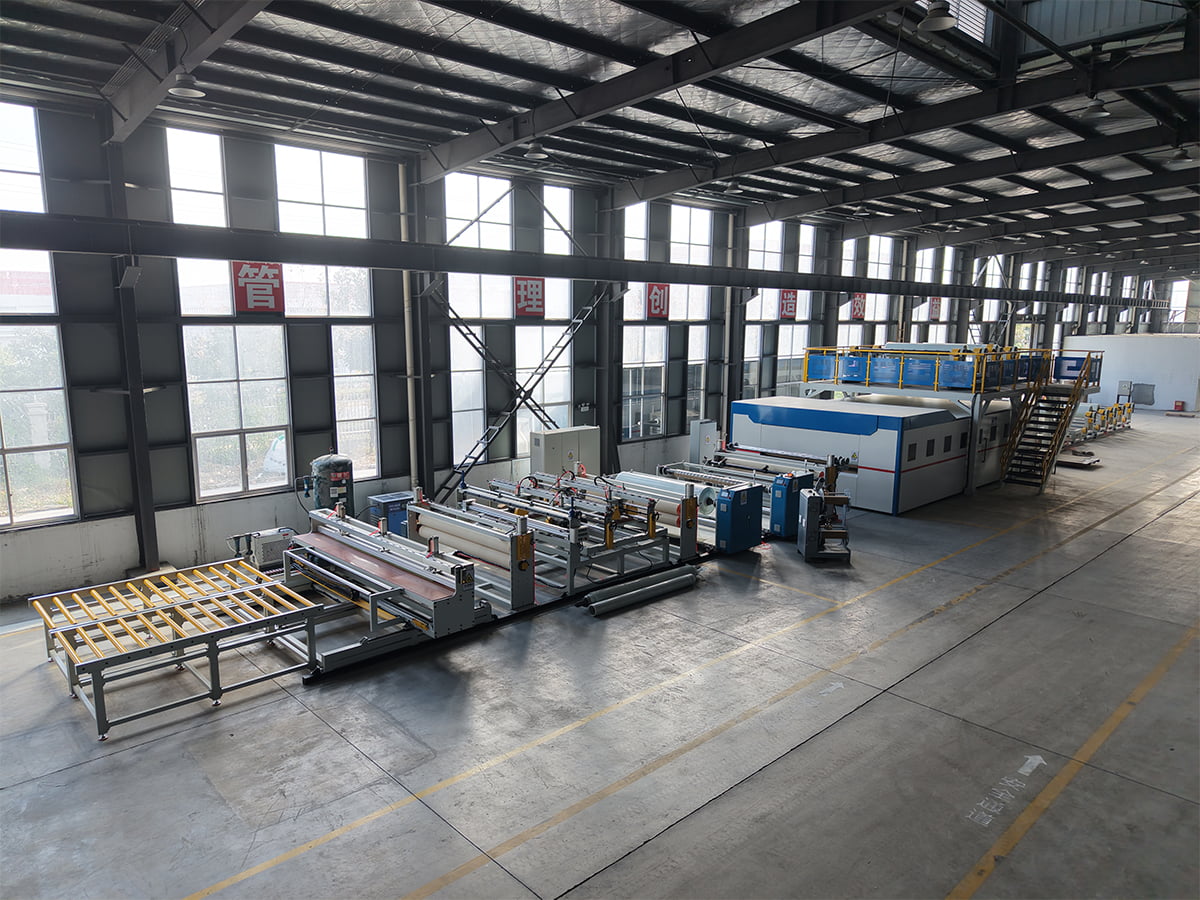
The lamination process decides how well these layers stay together. Heat, pressure, and adhesive application must be controlled across the full coil width, otherwise the panel can develop waviness, edge separation, or inconsistent peel strength. For example, manufacturers use an A2 coil production line to produce fire-rated composite coil in one continuous pass. For a wider view of what separates a reliable line from a troublesome one, read the guide on choosing a high-performance metal composite panel production line.
 A2 Coil Production Line Supplier, A2 ACP Composite Line FactoryJiangSu XieCheng is a China A2 coil production line supplier and A2 ACP composite line factory, we offer professional A2 coil production ...View Product →
Key ACM Material Properties You Should Know
The five properties that drive most ACM specification decisions are weight, flatness, flexural strength, thermal expansion, and peel strength. Together they control wind-load resistance, joint design, fabrication behavior, and long-term resistance to delamination.
Typical Values for a 4 mm ACM Panel with PE Core
| Property | Typical value | Why it matters |
|---|---|---|
| Panel weight | 5.5 kg/m2 | Reduces structural framing and crane loads |
| Flexural strength | 100 to 170 MPa | Resists wind pressure and panel deflection |
| Thermal expansion coefficient | 24 x 10-6 per K | Determines the joint gap needed for movement |
| Peel strength | Above 3 N/mm width | Prevents skin and core separation over time |
| Surface flatness | 0.2 mm per meter | Keeps sight lines straight under raking light |
The weight advantage of ACM shows up in the first structural calculation. A 4 mm ACM panel sits at roughly 5.5 kg/m2, while a 4 mm solid aluminum sheet comes in near 10.8 kg/m2. That difference of about 50 percent reduces the dead load carried by the facade support system. Lighter panels also mean safer handling on site and faster installation. The weight saving narrows as panel thickness increases, but for the 3 mm and 4 mm panels that dominate building cladding, the reduction remains significant.
Thermal Movement and Joint Design
Thermal expansion is the property most often overlooked until panels start to buckle at the seams. A 3000 mm PE-core panel grows by roughly 4.3 mm when the surface temperature rises by 60 degrees C, a normal summer range for a dark facade. An FR-core panel grows less, around 3.1 mm, because the mineral core has a lower expansion coefficient. This movement must be absorbed by open joints or engineered reveals; if restrained, the panel can buckle or show stress whitening at the edges. Designers size joint gaps from the expected temperature range, panel length, and core type. During fabrication, the same property explains why panels should be acclimatized before cutting and why tight butt joints are risky.
PE Core vs FR Core: How Core Choice Changes ACM Material Properties
Core choice reshapes the property profile of an ACM panel more than any other production decision. PE keeps the panel light, flexible, and inexpensive, while an FR core sacrifices some of that flexibility to gain fire resistance. The table below summarizes the practical differences.
| Attribute | PE core | FR core |
|---|---|---|
| Core material | Low-density polyethylene | Mineral-filled flame-retardant compound |
| Fire performance | B1 or B2 depending on formulation | A2 non-combustible in a full panel system |
| Typical weight, 4 mm panel | 5.5 kg/m2 | 5.9 to 6.2 kg/m2 |
| Formability | Excellent for tight radii | Good but more brittle at sharp folds |
| Relative cost | Lower | Higher |
| Typical projects | Signage, canopies, low-rise cladding | High-rise facades, public buildings |
The radar chart shows how core choice moves the balance of ACM material properties. The scores are directional ratings for comparison, not laboratory test values. A PE core scores high on formability, cost efficiency, and panel lightness, the attributes that keep signage and low-rise cladding budgets under control. Its weak point is fire safety, which is why PE-core panels are restricted in high-rise buildings. An FR core shifts the profile strongly toward fire resistance while giving up some formability and cost advantage, because the mineral-filled compound is more brittle at the bending line. Weather resistance stays similar for both cores, since the aluminum skins carry most of the weathering duty. The practical takeaway is that local building codes, not personal preference, should dictate which core profile is acceptable.
When a project needs B1 performance with moderate cost, panels are produced on a line configured for PE and flame-retardant cores. A PE B1 FR ACP composite line handles this class of panel with closely controlled heat, pressure, and cooling settings.
OEM PE/B1-FR ACP Composite Line Supplier, Factory - JiangSu XieCheng IntelligentJiangSu XieCheng is a China PE/B1-FR ACP Composite Line supplier and OEM factory, we provide professional PE/B1-FR ACP Composite Line sal...View Product →Fire Ratings and Their Impact on Material Selection
Fire classification should be the first filter when selecting ACM material properties for a building. National codes in most markets restrict combustible panels on high-rise or public-occupancy buildings, and the panel core is what decides which class the panel can pass.
- A2: practically non-combustible, mineral-filled core, used for high-rise facades and buildings with strict fire requirements.
- B1: flame-retardant, limited contribution to fire spread, suitable for many low-rise and mixed-use applications.
- B2: standard polyethylene core, acceptable only where code allows limited combustibility.
Producing a true A2 panel requires dedicated equipment, because the mineral core behaves differently from PE during coating, heating, and lamination. The A2 metal composite panel production line is built for that purpose, with mixing, metering, and cooling stages matched to fire-retardant core chemistry. The result is a panel that can support a full A2 system rating when combined with the correct adhesives and substructure.
OEM A2 Metal Composite Panel Production Line Supplier, Factory - JiangSu XieChenJiangSu XieCheng is a China A2 Metal Composite Panel Production Line supplier and OEM factory, we provide professional A2 Metal Composite...View Product →ACM vs Solid Aluminum: What the Properties Mean in Practice
ACM panels and solid aluminum sheets overlap in some applications, but the comparison usually comes down to weight, flatness, and fabrication cost. ACM wins on weight and flatness; solid aluminum wins where welding, impact resistance, or very high stiffness in thin sections is required.
| Criterion | 4 mm ACM panel | 4 mm solid aluminum sheet |
|---|---|---|
| Weight | 5.5 kg/m2 | 10.8 kg/m2 |
| Flatness over a 1 m span | about 0.2 mm deviation | 0.4 to 0.6 mm deviation typical |
| Welding | Not weldable | Weldable |
| Bending | Rout and fold on site | Requires press brake work |
| Impact behavior | Good, but dents can appear | Higher residual strength |
| Typical panel width | Up to 2000 mm | Limited by rolling width |
ACM replaced solid aluminum sheet in many facade systems for a clear reason. Solid aluminum is set to 100 on every metric, so a shorter column is the better result. ACM comes in at roughly half the dead weight, which allows lighter structural framing and lower foundation costs. The flatness advantage is even larger, because the core holds the thin skins flat and suppresses oil-canning. Fabrication takes about 30 percent less labor time, because ACM can be routed and folded without heavy press-brake work. The installed system usually lands below the cost of a solid aluminum facade.
How ACM Material Properties Affect Fabrication and Installation
Most on-site problems with ACM trace back to three properties: thermal expansion, peel strength, and core hardness. Design the details around these and the panel will behave predictably for decades.
- Route depth: consistent core density is needed for clean V-grooves. Mineral-filled FR cores wear router blades faster.
- Bending: PE allows a tighter inside radius without stress whitening.
- Thermal gaps: use the movement data to set joint widths between fixed points.
- Cutting clean: aluminum dust left on cut edges can start cosmetic corrosion in coastal air.
- Storage: panels stored on edge in the sun absorb heat unevenly and can show waviness.
Panels that arrive with consistent thickness, strong peel values, and stable shape make every later step easier, and those characteristics are fixed at the production stage. If the panels are made on equipment that controls coating weight, lamination pressure, and cooling evenly, the material properties stay inside specification from coil to finished panel.
Choosing the Right ACM Panel for Your Project
Selecting ACM panels is a sequence of checks, not a single decision. Start with the fire class required by the local code and building height, then verify that the core type can deliver that class. Confirm the coating system, because PVDF finishes outlast polyester in coastal and high-UV locations. Review test data for peel strength and flatness tolerance rather than trusting a sample.
- Confirm the required fire rating from the building code before comparing prices.
- Match panel thickness to wind load and maximum span between supports.
- Ask for peel strength and dimensional tolerance data as part of the submittal.
- Choose PVDF coating for exterior projects above one story.
- Plan the fabrication sequence with the installer before ordering.
If you are planning a new metal composite panel line or upgrading an existing one, contact our engineering team to review the material properties your panels need to meet.