
 English
 русский
 Español
 عربى
عربى
Content
A five-layer SPC flooring line running at five to six metres per minute can lose half a shift of output to something as small as a 0.1 mm thickness drift. The operator sees it on the finished pallet, not at the die, and by then the extruder has already pushed several hundred metres of off-spec plank. The same pattern shows up on CFRT tape lines, PVC and PU leather coating lines and metal composite laminating lines. The machine is capable; the process is simply not corrected fast enough.
That is the real case for extrusion machinery automation. It is not about replacing operators, and it is not about buying the most expensive controller on the market. It is about closing the loops that decide thickness, adhesion and surface quality, and closing them fast enough that a correction happens before material is wasted. Everything below follows from that single idea.
What Extrusion Machinery Automation Actually Covers
On an extrusion-based composite line, automation is a stack of control loops rather than one feature. A line can be well automated in one place and completely manual two metres downstream, which is why two factories running similar equipment end up with very different yields. The loops that matter most are:
- Melt feed and dosing: gravimetric or volumetric feeding of resin, filler and additive, held in a narrow band so the screw never has to compensate for a starved throat.
- Screw speed and melt pressure: pressure at the die entrance is the number that reveals what is happening inside the barrel, and it should drive screw speed, not the other way round.
- Barrel and die temperature: zone control with enough resolution to keep melt viscosity stable through a long run, including start-up and material changes.
- Gauge control: a thickness or basis-weight gauge feeding back to die lip adjustment, roll gap or line speed, so the correction is automatic rather than operator-initiated.
- Speed and tension synchronisation: haul-off, laminating rolls, embossing rolls and winders tracking one master reference, so the web is neither stretched nor slack.
- Winding, trimming and edge control: constant tension winding and automatic edge trimming that keep the finished roll saleable.
These loops sit at four practical levels. Manual control relies on an operator reading gauges and turning handwheels. Open-loop recipe control stores settings per product but does not react to drift. Closed-loop control with a gauge or pressure sensor corrects by itself. Full line supervision adds data logging, alarms and traceability, which is usually the first thing a customer audit asks to see.
Where Automation Pays Back First
Automation budgets are limited, so the order of spending matters more than the total. In most composite plants, gauge control and tension control repay their cost faster than anything else, because they attack scrap and downgrade, which are visible on the balance sheet every day. Changeover time and energy consumption usually come second.
| Control loop | Manual operation | Closed-loop operation | Main financial effect |
|---|---|---|---|
| Thickness and basis weight | Correction after the drift is spotted | Continuous correction from the gauge signal | Less scrap, less downgrade, more saleable metres |
| Melt pressure and screw speed | Adjustments chasing pressure swings | Pressure held as the controlled variable | Stable dimensions, fewer start-up rejects |
| Web tension | Visible slack or stretch at higher speeds | Tension held by dancer or load cell feedback | Fewer wrinkles, better adhesion, fewer breaks |
| Temperature zoning | Readings drift as ambient conditions change | PID control on each zone | Consistent surface finish across shifts |
| Recipe changeover | Hand-set values, several trial metres | Stored parameters recalled in one step | Shorter downtime between product grades |
A simple way to size the spend is to measure the scrap rate and the downgrade rate for one month, then estimate how much of each is caused by variation in thickness, tension or temperature. Automation that removes half of that variation usually pays back well inside two years on a line running two or three shifts.
Matching the Automation Level to the Product You Make
Different extrusion and lamination products put the priority on different loops. A control package that is ideal for one material can be oversized, or simply aimed at the wrong variable, for another.
CFRT and thermoplastic composite lines
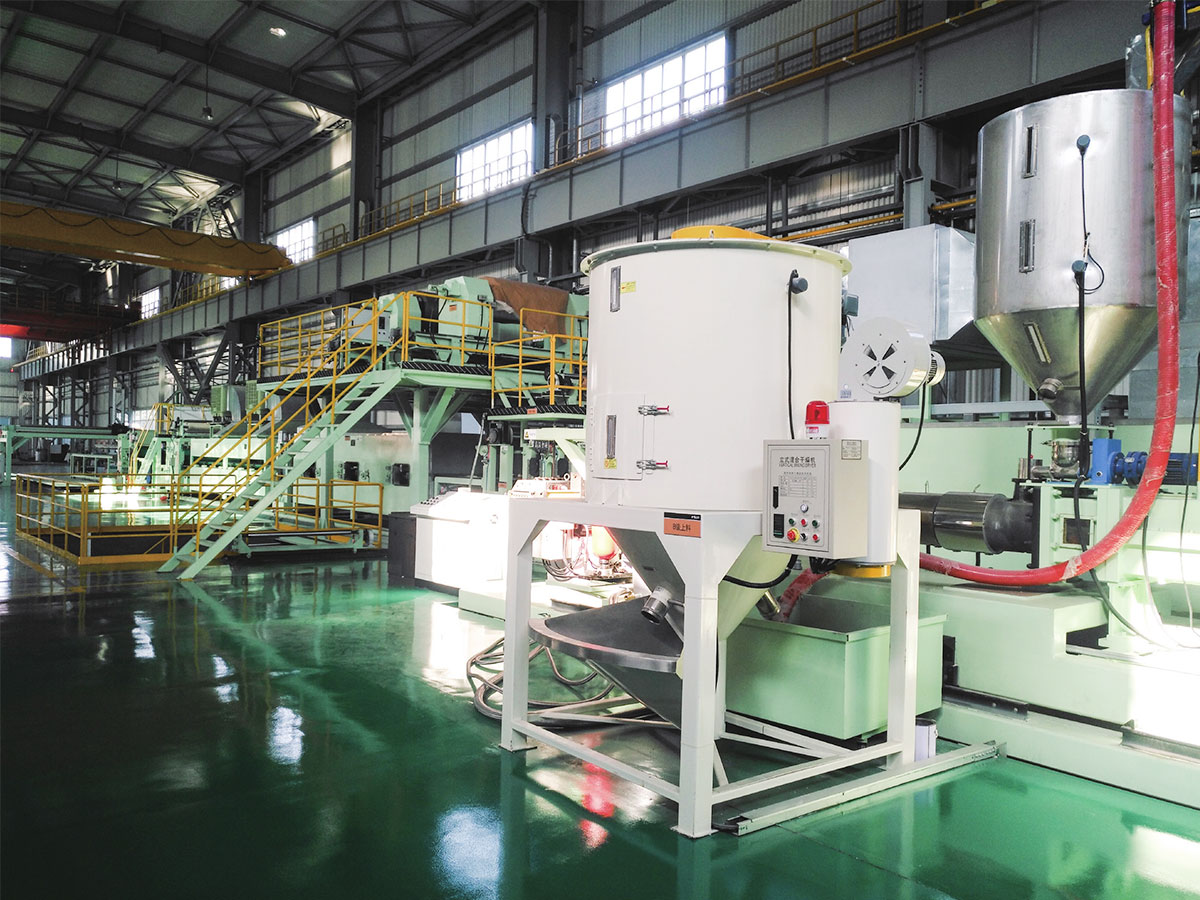
On PET or PP based continuous fibre reinforced thermoplastic lines, the extruder has to plasticise the polymer and impregnate the fibre roving in a single pass. Melt pressure stability and impregnation temperature decide whether the tape is fully wet out, while roving tension decides whether the fibre stays where it was placed. Automation here is mostly about holding three variables steady at the same time as line speed rises, and about logging them so a customer can be shown the process window behind a delivered roll.
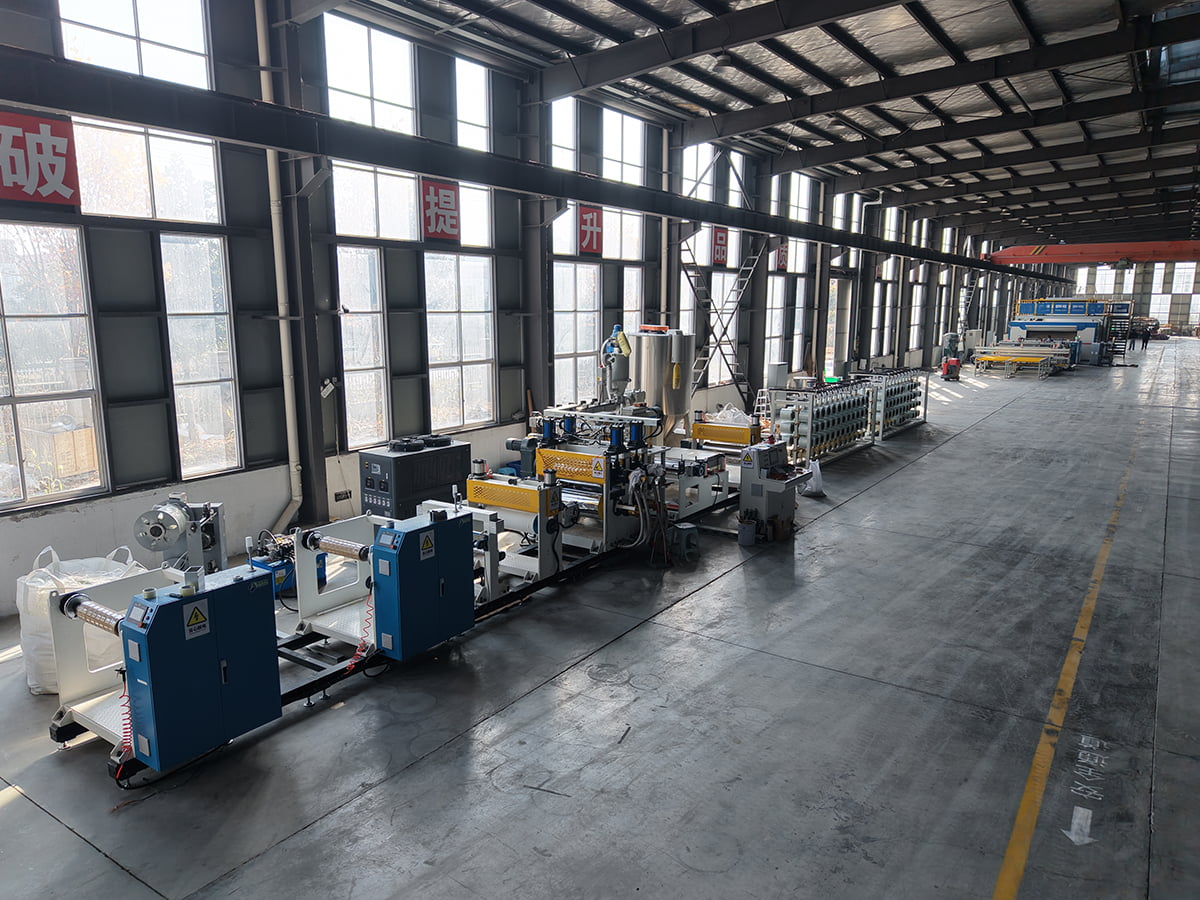 PET/PP CFRT Composite Material Production LineReview this OEM PET/PP CFRT production line for continuous fibre reinforced thermoplastic, where stable melt pressure, impregnation temperature and roving tension support consistent tape output.View Product →
SPC flooring and PVC laminate lines
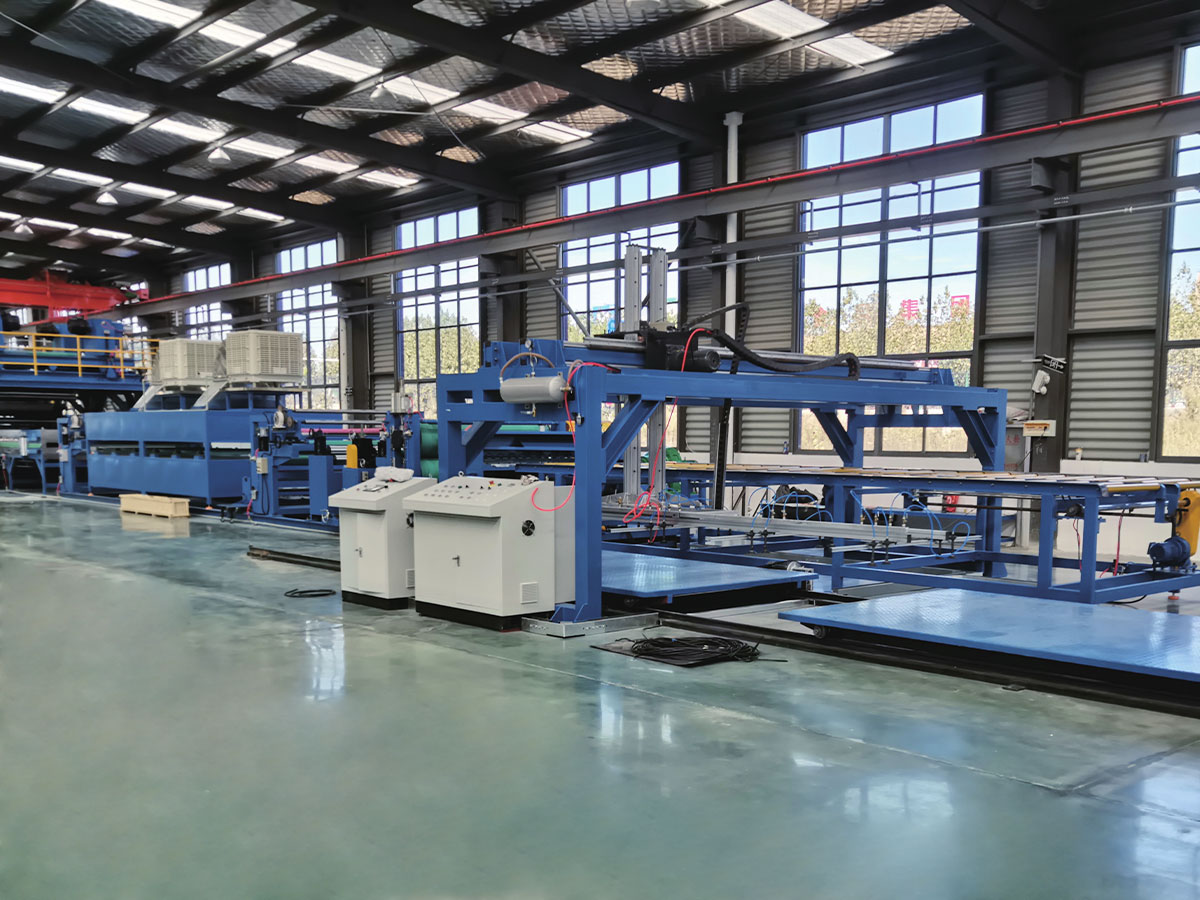
SPC plank production combines an extruder with a calender and a laminating section. Thickness control starts at the die but finishes at the roll gap, and the two have to be tuned together. Density variation, embossing depth and lamination temperature are the usual sources of complaints from flooring buyers, so the useful automation is the type that keeps roll gap and laminator temperature under closed-loop control instead of on a handwheel. Buyers planning a new line can review the basic process sequence in this overview of a PVC laminate panel production line before agreeing on the control scope.
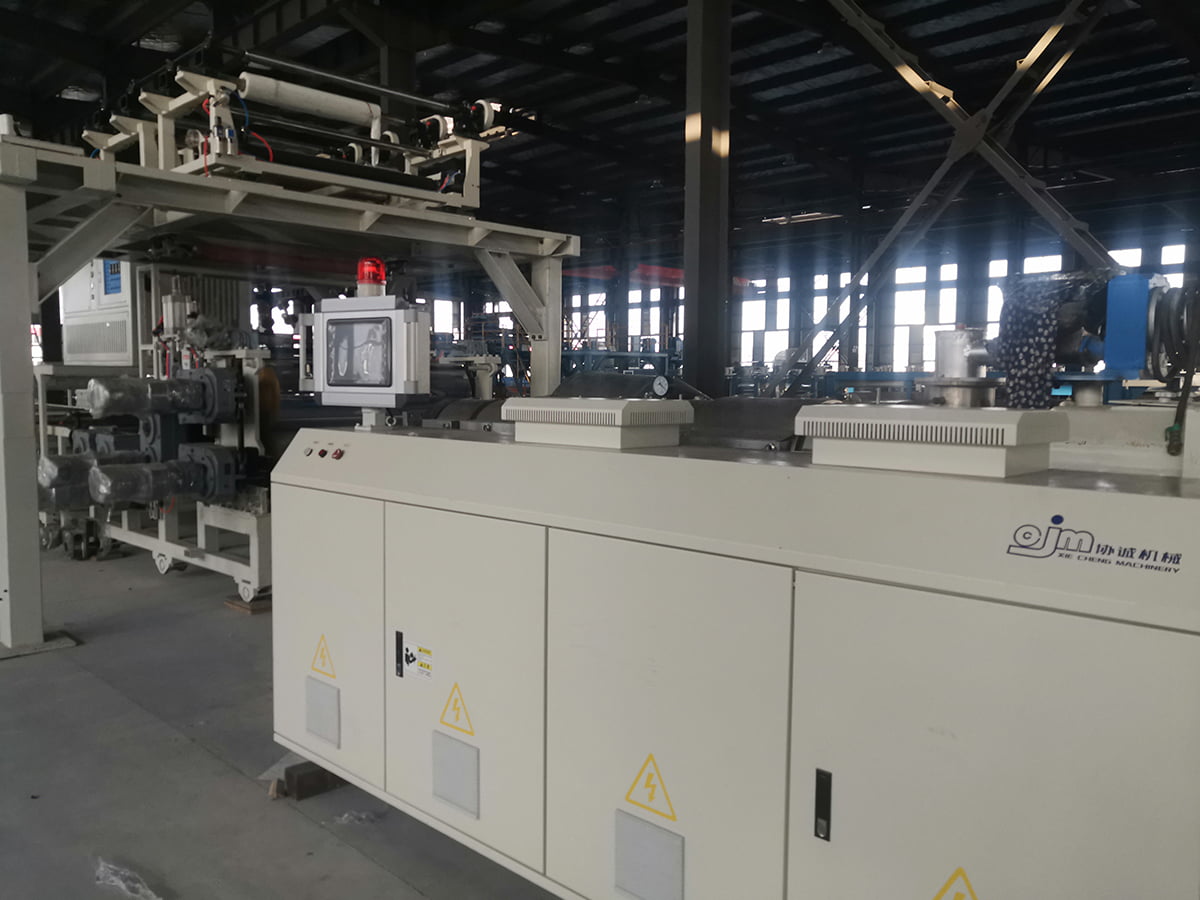 OEM PVC/WPC/SPC Flooring Production LineReview this OEM SPC flooring line for integrated extrusion, calendaring, laminating and embossing, with ±0.1 mm base thickness accuracy and PLC/HMI control.View Product →
PVC and PU leather coating lines
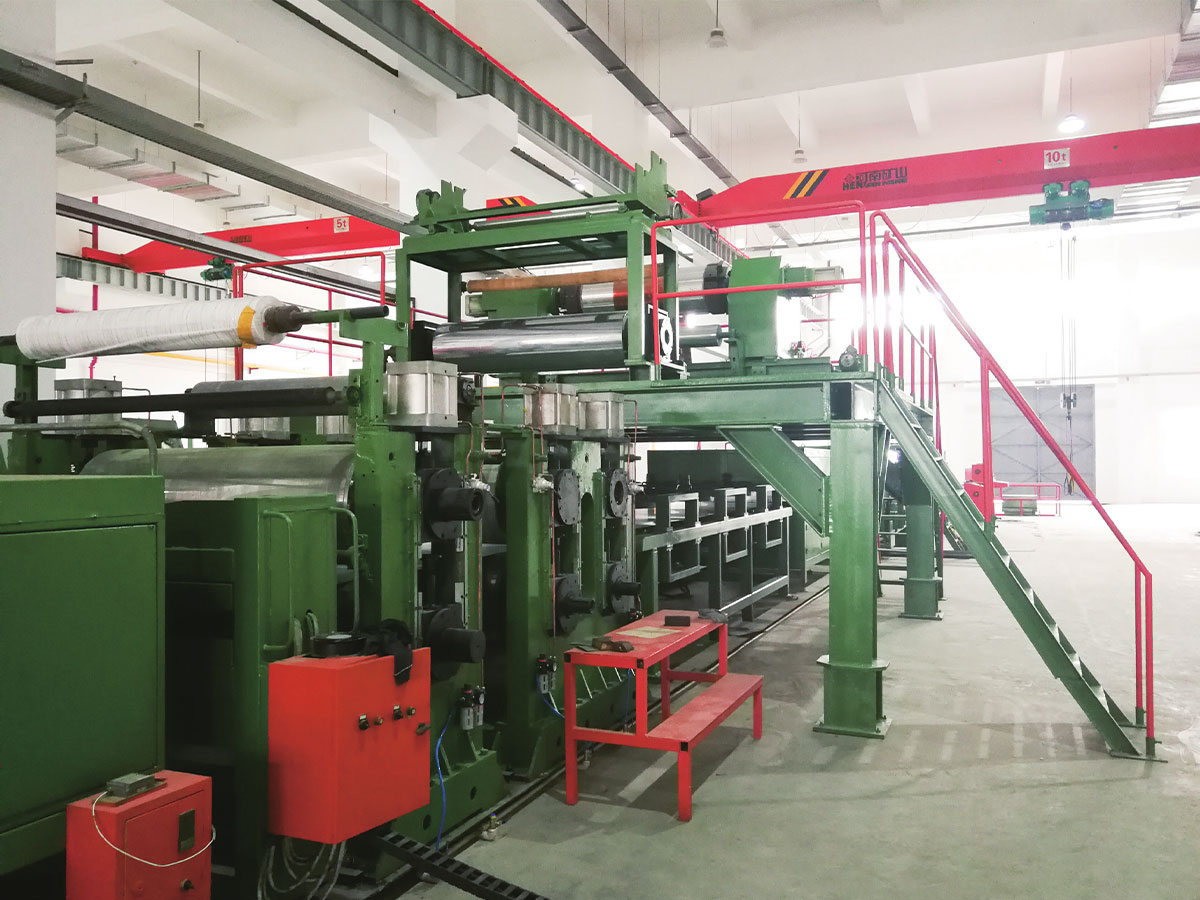
Coating and embossing lines live or die on coating weight and roll temperature. A coating head that varies by a few grams per square metre produces visible shade differences after embossing, and release paper tension that drifts produces register error. Closed-loop coating weight, embossing roll temperature and multi-zone tension control are the three items worth insisting on.
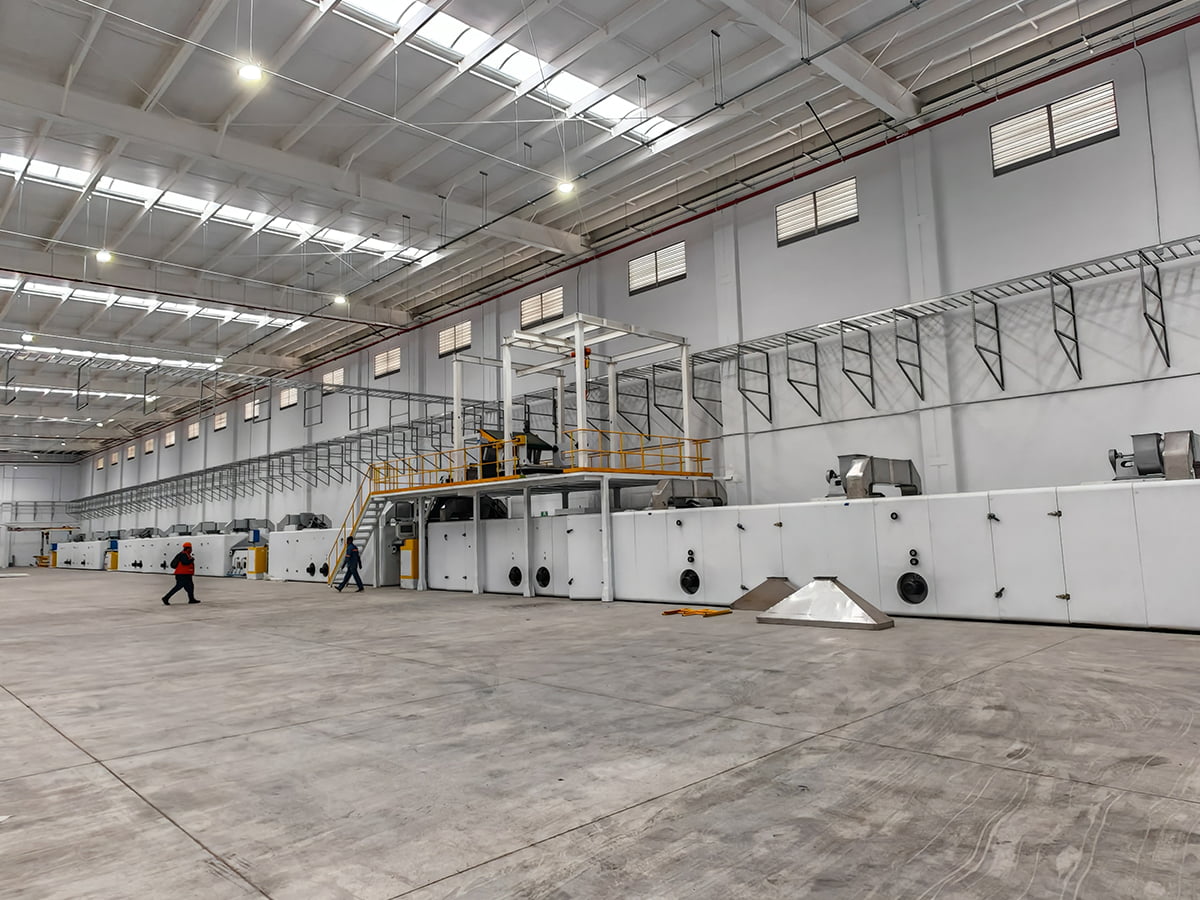 OEM PVC/PU Leather Embossing and Coating LineReview this OEM PVC/PU leather coating and embossing line; coating weight, embossing roll temperature and multi-zone tension control are key for consistent output.View Product →
Metal composite panel and coil coating lines
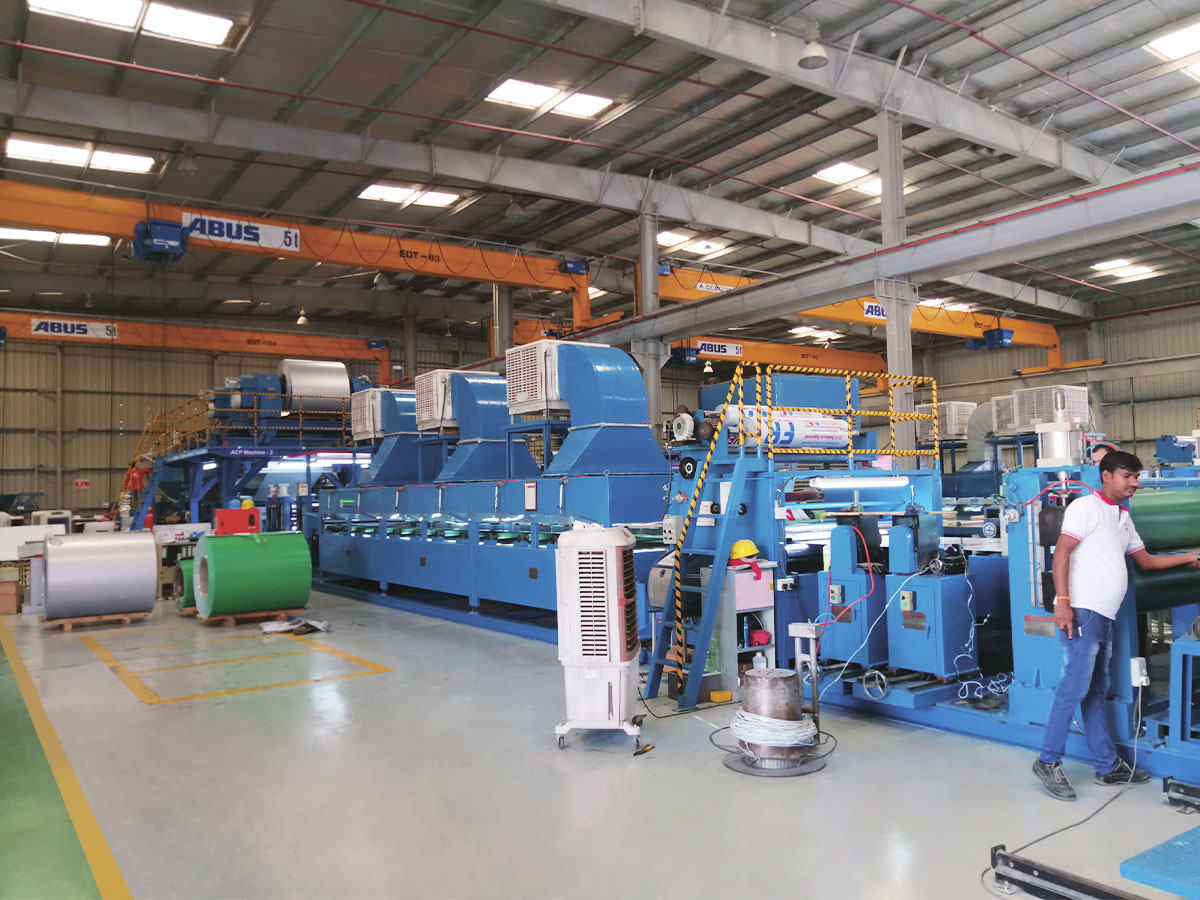
These lines laminate rather than extrude, but the control architecture is the same: laminating roll temperature, adhesive film tension, line speed and take-off synchronisation. Because the output is often a fire-rated panel, traceability matters as much as tolerance. A logged record of temperature, speed and tension per coil is frequently the difference between passing and failing a customer audit.
What to Write Into a Purchase Contract
Most automation disputes come from a specification that named a controller brand and nothing else. These items are worth defining in writing before an order is placed:
- Controlled variables and sensors: which loops are closed, with which sensor type, range and accuracy.
- Acceptance tolerances: the thickness, coating weight or tension band the line must hold during a witnessed run, at a stated speed and material.
- Demonstration material and duration: how many metres, over how many hours, with what start-up and changeover sequence.
- Recipe management: how many products can be stored, who may edit parameters, and whether changes are logged.
- Data output: the format of production records and whether they can be exported for a customer audit.
- Controller openness: whether the program, HMI screens and spare parts list are handed over, and whether third-party integration is permitted.
- Remote access and service terms, including response times and the spare parts supplied with the line.
Integration Mistakes That Cost Months
- Automating the extruder but leaving the haul-off manual, so the closed loop fights an uncontrolled section downstream.
- Sizing the gauge for the start-up range instead of the running range, which limits resolution exactly when it is needed.
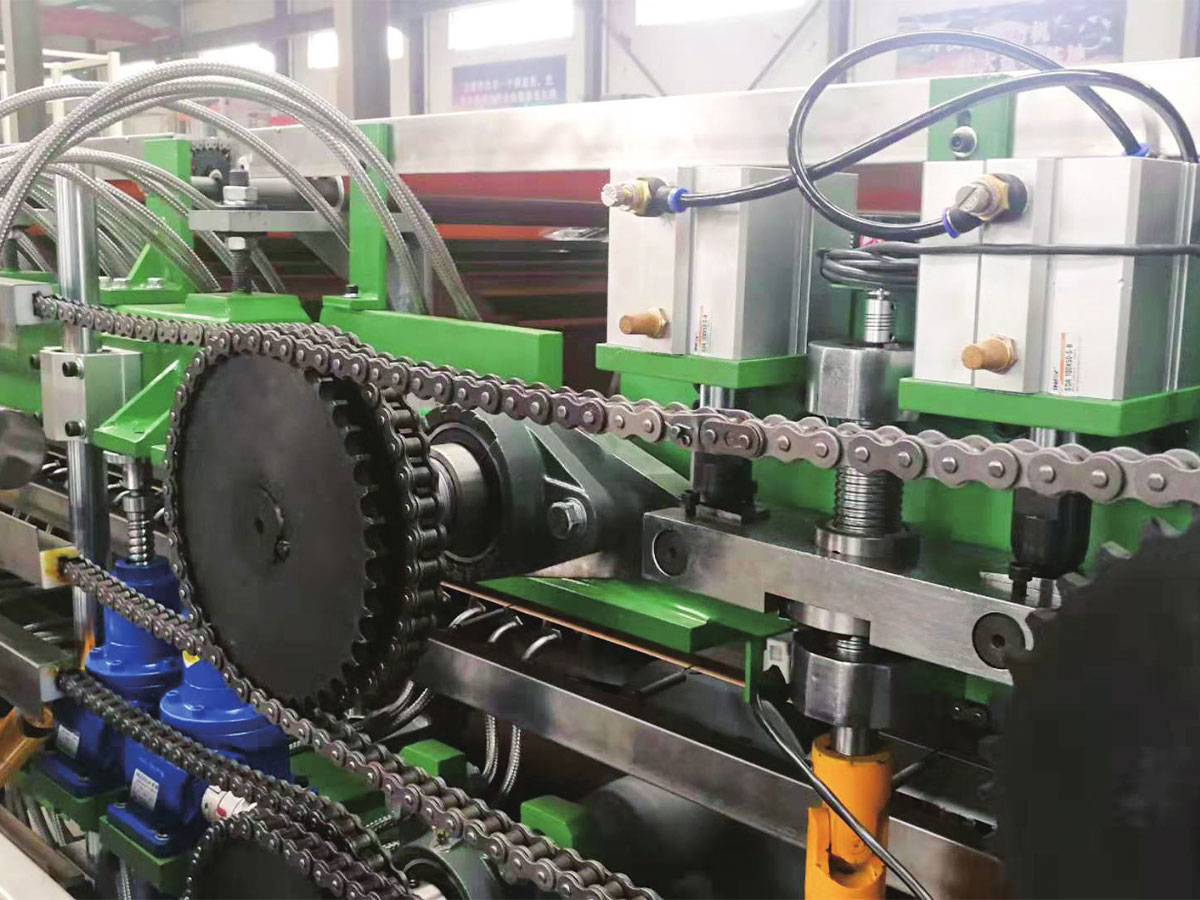
- Ignoring mechanical condition: a worn screw or a slack drive chain cannot be corrected by better software.
- Choosing a controller the local maintenance team cannot service, or accepting a locked program with no documentation.
- Commissioning on one product grade only, then finding that the next grade needs a control range the sensors cannot cover.
Automation Does Not End at the Control Cabinet
Whatever the control package, a line only stays productive if the mechanical side, the spares and the process knowledge remain available, which is where supplier choice matters as much as hardware. JiangSu XieCheng Intelligent Equipment builds composite and coating lines from its base in the Jinhu Economic Development Zone, Huai'an, Jiangsu. Its range runs from A2 and B1 metal composite panel equipment and metal coil coating lines to CFRT, SPC flooring and PVC/PU leather lines, plus non-standard equipment for processes that standard machines cannot cover. The group behind it operates a provincial engineering technology research centre for A2 grade fireproof aluminium composite panels and their production equipment, and its A2 aluminium composite panel production line has been recognised as a first set of major equipment at provincial level. The company also supplies A2 fireproof core coils, coated aluminium coils and polymer adhesive films, which matters when a new line needs matched raw materials instead of a trial-and-error search.
After delivery, support is split between remote diagnostics, on-site service and spare parts supply. Before a line is specified, it is worth sending the product specification, the target speed and the required tolerance band to the equipment supplier and asking for a control scope that matches them, because that conversation usually reveals more than any brochure. You can start it through our contact page.