

 English
 русский
 Español
 عربى
عربى
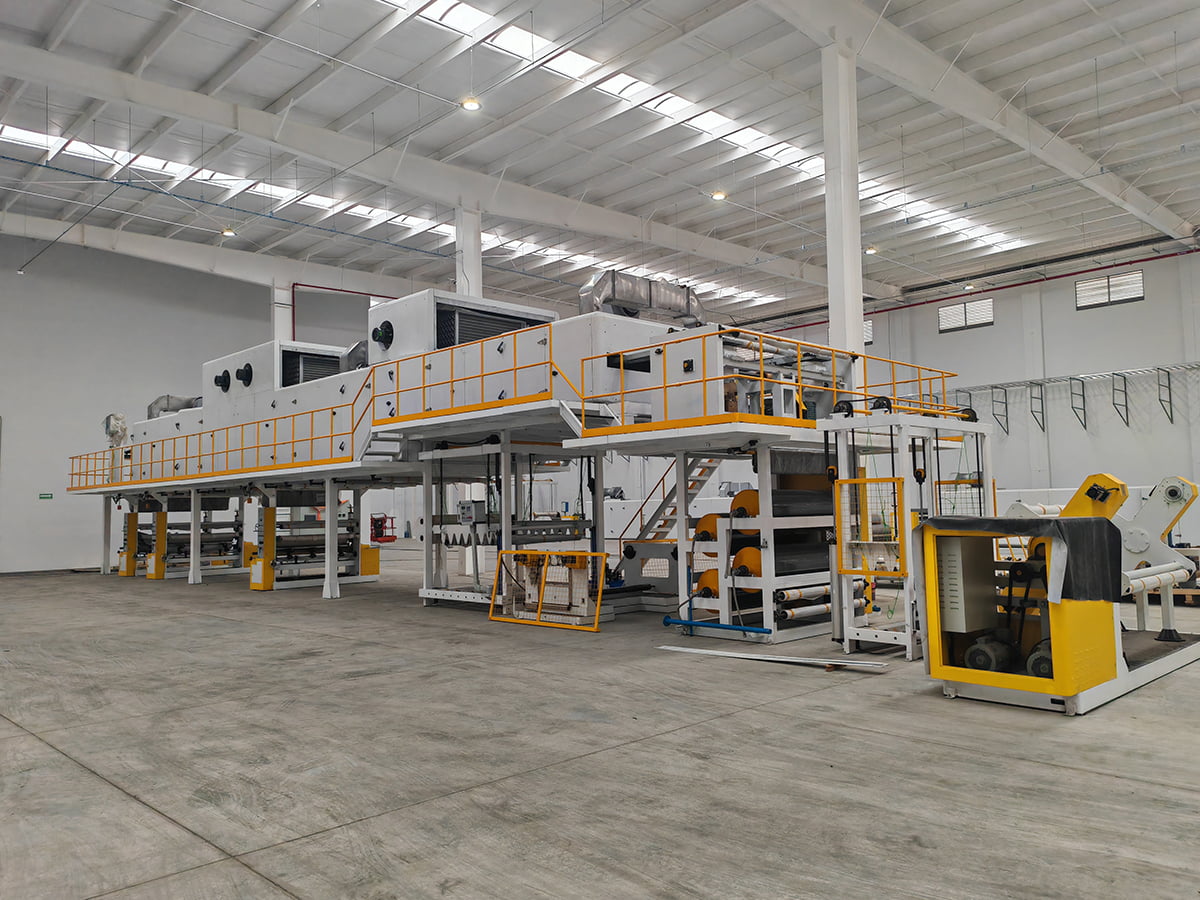

The PVC/PU Leather Production Line is a highly efficient equipment system specifically designed for producing synthetic leather (also known as artificial leather). This production line primarily involves processes such as coating, calendering, and curing to convert PVC (Polyvinyl Chloride) or PU (Polyurethane) materials into artificial leather that resembles the appearance and feel of natural leather. PVC/PU leather has become an important material in industries such as furniture, automotive interiors, footwear, and clothing, thanks to its durability, ease of cleaning, low cost, and wide applicability.
During the production process, the PVC/PU Leather Production Line achieves multiple stages such as coating, calendering, curing, and cooling through continuous processes, ensuring the final product's quality, uniformity, and durability. Due to continuous technological advancements, PVC/PU leather not only closely resembles natural leather in appearance but also shows significant improvements in flexibility, abrasion resistance, and water resistance.
Core Process Flow of the PVC/PU Leather Production Line
Feeding and Mixing
The feeding system mixes PVC or PU raw materials with necessary additives (such as plasticizers, stabilizers, fillers, etc.) to ensure uniformity of the materials. For PVC leather, a certain proportion of plasticizers is typically blended to ensure the final product’s flexibility.
Coating and Calendering
Coating: The prepared PVC or PU slurry is evenly coated onto the surface of a substrate (such as fabric or nonwoven fabric). The uniformity of the coating directly impacts the thickness and softness of the leather.
Calendering: The coated substrate is passed through a calendering machine, where high-temperature calendering further enhances the density and uniformity of the coating, while also creating the surface texture of the leather.
Curing
The curing process involves heating to chemically crosslink the coating, ensuring the stability and durability of the PVC or PU leather. Temperature control during curing is critical; too high a temperature may cause surface cracking, while too low a temperature may affect the adhesion of the coating.
Cooling and Shaping
After curing, the leather material is quickly cooled by a cooling system to prevent deformation. During the cooling process, automated equipment is often used to ensure the leather's flatness and surface smoothness.
Post-treatment
Post-treatment processes such as embossing, printing, and polishing are performed on the leather surface to enhance its decorative effect and added value. In particular, PVC leather is often embossed to mimic the texture of natural leather.
Advantages and Features of PVC/PU Leather
| Feature | PVC Leather | PU Leather |
| Appearance and Feel | Resembles natural leather, with various texture treatments available. | Feels closer to natural leather, offering better softness and a more authentic texture. |
| Durability | Harder, with strong abrasion resistance and good water resistance. | Softer, with stronger crack resistance and better aging resistance. |
| Environmental Friendliness | Relatively eco-friendly, recyclable but contains chlorides. | Mainly made of PU resin, non-toxic, and more environmentally friendly. |
| Applications | Primarily used in furniture, footwear, and luggage. | Used for high-end furniture, automotive seats, and footwear. |
| Production Cost | Relatively low, suitable for mass production. | Higher cost, suitable for premium products. |
Application Areas of PVC/PU Leather Production Line
The synthetic leather produced by PVC and PU leather production lines is widely applied in various industries, including:
Furniture Industry: Used for covering the surface of sofas, chairs, mattresses, etc., providing excellent durability and decorative effects.
Automotive Interiors: PVC/PU leather is widely used for automotive seat covers, roofs, door panels, and other interior materials, offering advantages such as wear resistance, stain resistance, and ease of cleaning.
Footwear Industry: Used in the production of shoe uppers, soles, and other parts of footwear, providing good flexibility, comfort, and durability.
Luggage and Accessories: PVC/PU leather is commonly used in the production of luggage, wallets, backpacks, etc., offering both aesthetic appeal and practical benefits such as abrasion resistance and water resistance.
Clothing Industry: Used for making fashion jackets, skirts, pants, etc. Especially with the influence of fashion trends, PU leather is widely used for its softness and comfort.
Frequently Asked Questions (FAQ)
What is the main difference between PVC and PU leather?
PVC leather typically uses PVC resin and plasticizers as its base, making it harder with strong water resistance and abrasion resistance, suitable for furniture and flooring applications. On the other hand, PU leather uses polyurethane as its base, offering better softness, a more authentic touch, and a more natural appearance, commonly used for high-end furniture, automotive interiors, and fashion accessories.
How efficient is the PVC/PU leather production line?
The PVC/PU leather production line uses continuous processes, capable of producing hundreds of square meters of leather per hour. The production efficiency depends on the equipment configuration and the level of automation of the production line. During large-scale production, the line can operate 24 hours a day, significantly enhancing production efficiency.
How is the quality of PVC/PU leather maintained?
By precisely controlling the process parameters at each production stage (such as coating thickness, temperature, curing time, etc.) and using high-precision automated equipment, the quality of each batch of leather is ensured to be stable and consistent. Additionally, strict quality control checks are performed during production to ensure the final product meets the standards.
Is PVC/PU leather eco-friendly?
PVC leather is relatively eco-friendly and recyclable; however, due to the use of chlorides during production, it still requires proper disposal. PU leather, made from polyurethane materials, is typically non-toxic and more environmentally friendly. With technological advancements, many manufacturers are working to improve their production processes to reduce the environmental impact.
The PVC/PU Leather Production Line is the core equipment in modern synthetic leather manufacturing. Through continuous processes such as coating, calendering, and curing, it can produce high-quality artificial leather widely used in industries such as furniture, automotive interiors, footwear, and luggage. With precise process control and automated production, the PVC/PU leather production line not only enhances production efficiency but also greatly reduces production costs, driving the widespread use of synthetic leather. As the demand for environmentally friendly and high-quality leather increases in the market, future production lines will be more intelligent and eco-friendly, meeting the increasingly diverse market needs.