
 English
 русский
 Español
 عربى

Content
Two PET/PP CFRT composite lines can carry the same price, the same working width and the same promise of up to 1,200 kg/h, and still behave very differently on the shop floor. The difference usually sits in the extrusion system: screw diameter and length to diameter ratio, whether a melt pump stabilises pressure, how the die lips are adjusted, and how the roll stack removes heat. Every stage downstream, from fibre wet-out to winding tension, can only preserve the quality the extruder delivers.
The practical rule is therefore straightforward: define the extrusion system first and size the rest of the line around it. A coating, laminating or embossing stage rated faster than the extruder can feed it is capacity you pay for and never use. An extruder sized for output but not for the material you actually run will give you gauge drift, gel spots and premature screw wear for the life of the machine. This article covers what an extrusion system includes on a composite line, how to match it to PET, PP, PVC and filled compounds, which tolerances carry commercial weight, and what to test before final payment.
What Counts as an Extrusion System on a Composite Line
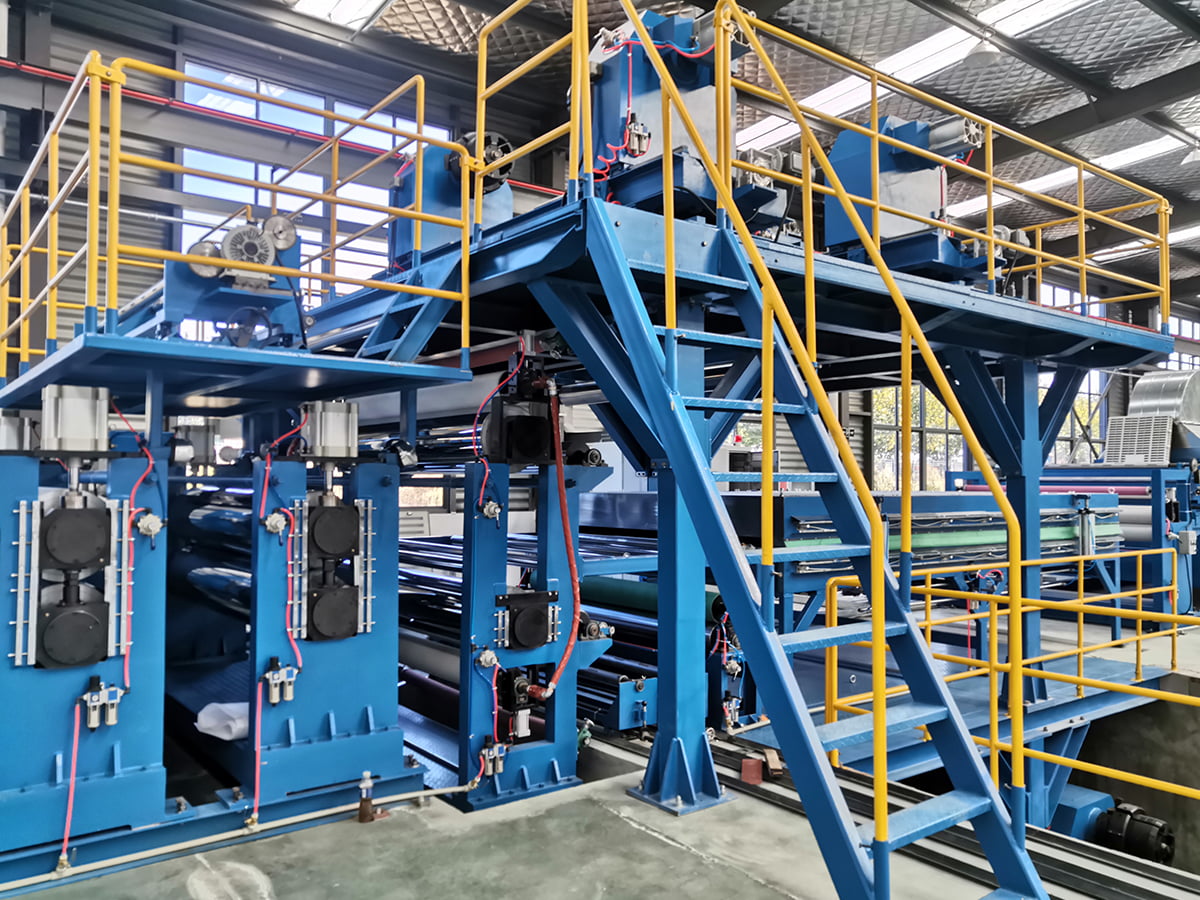
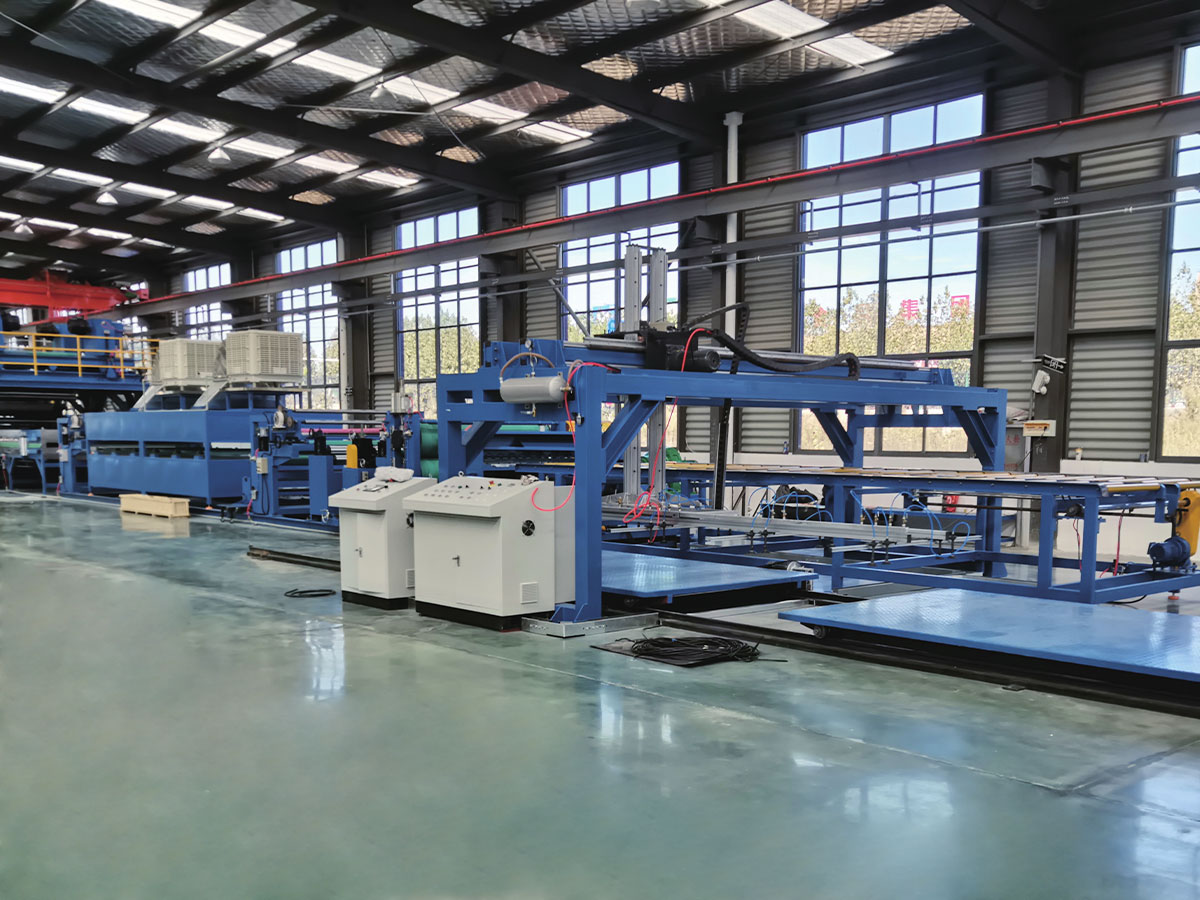
On a composite production line the extrusion system is not one machine but a chain of units that must hold the same set point together: material handling and drying, the screw and barrel, a melt pump or pressure control loop, the die, the roll stack or cooling section, and the haul-off that sets line speed. Thickness is created at the die, frozen at the cooling stage, and then laminated, embossed or coated.
The duty changes with the product. A CFRT line extrudes a thin, hot melt that has to wet out continuous fibre, while a flooring line extrudes a heavily filled sheet that is later calendered to final gauge. The table below shows how the same hardware category shifts in priority from product to product.
| Line type | Extrusion duty | Typical polymer | Verify first |
|---|---|---|---|
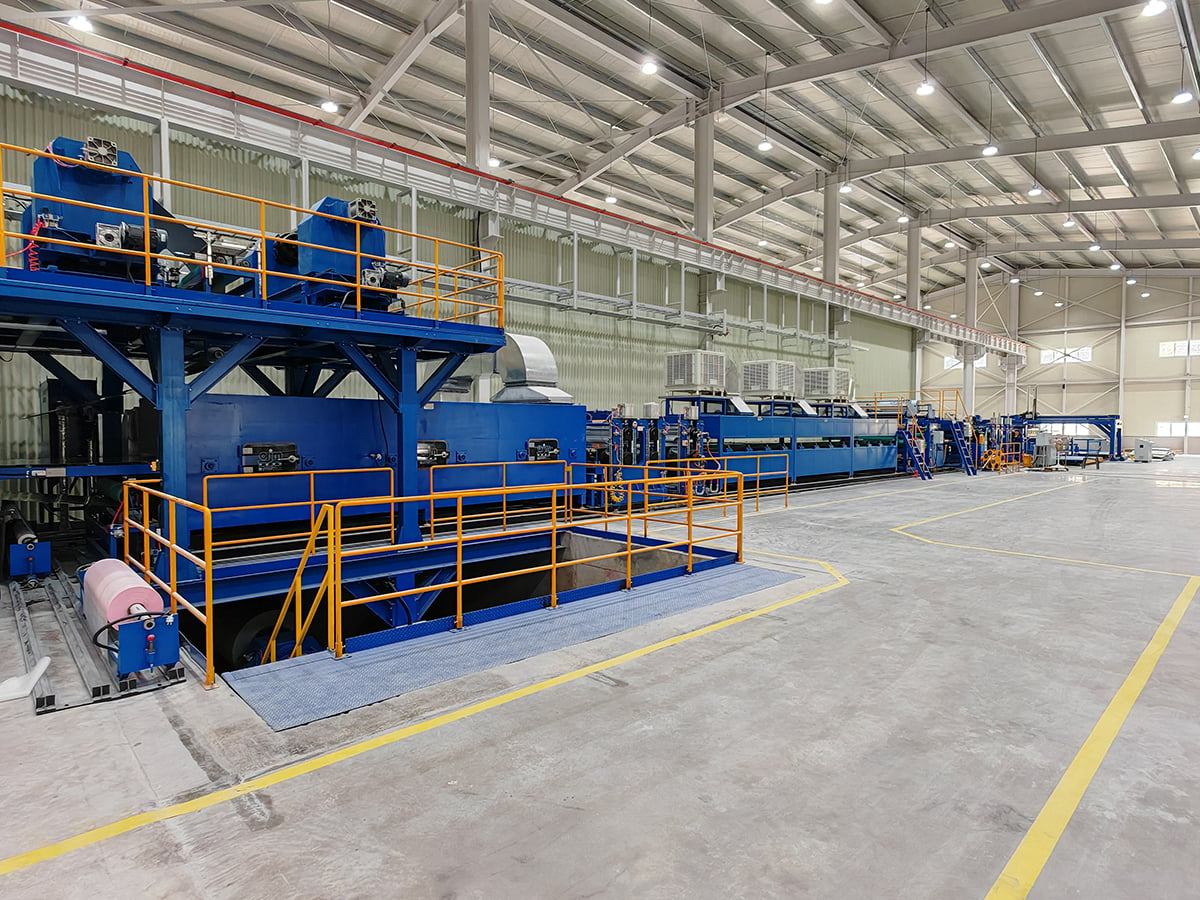
| PET/PP CFRT composite line | Melt impregnation of continuous fibre, then sheet forming and lamination | PET, PP, sometimes PA | Melt temperature uniformity across the die width and fibre wet-out at target line speed |
| SPC flooring production line | Filled PVC sheet extrusion, calendering and lamination to the wear layer | PVC with calcium carbonate filler | Screw and barrel wear resistance, output per die width, gauge control after calendering |
| PVC/PU leather embossing and coating line | Compound plasticising and coating onto release paper or fabric | PVC compound, PU | Coating thickness repeatability, roll temperature stability, surface defect rate |
| Metal composite and coil coating lines | Adhesive and coating layers rather than bulk extrusion | PE, PUR, film adhesives | Whether the core sheet is bought in or produced in house, and how adhesion is validated |
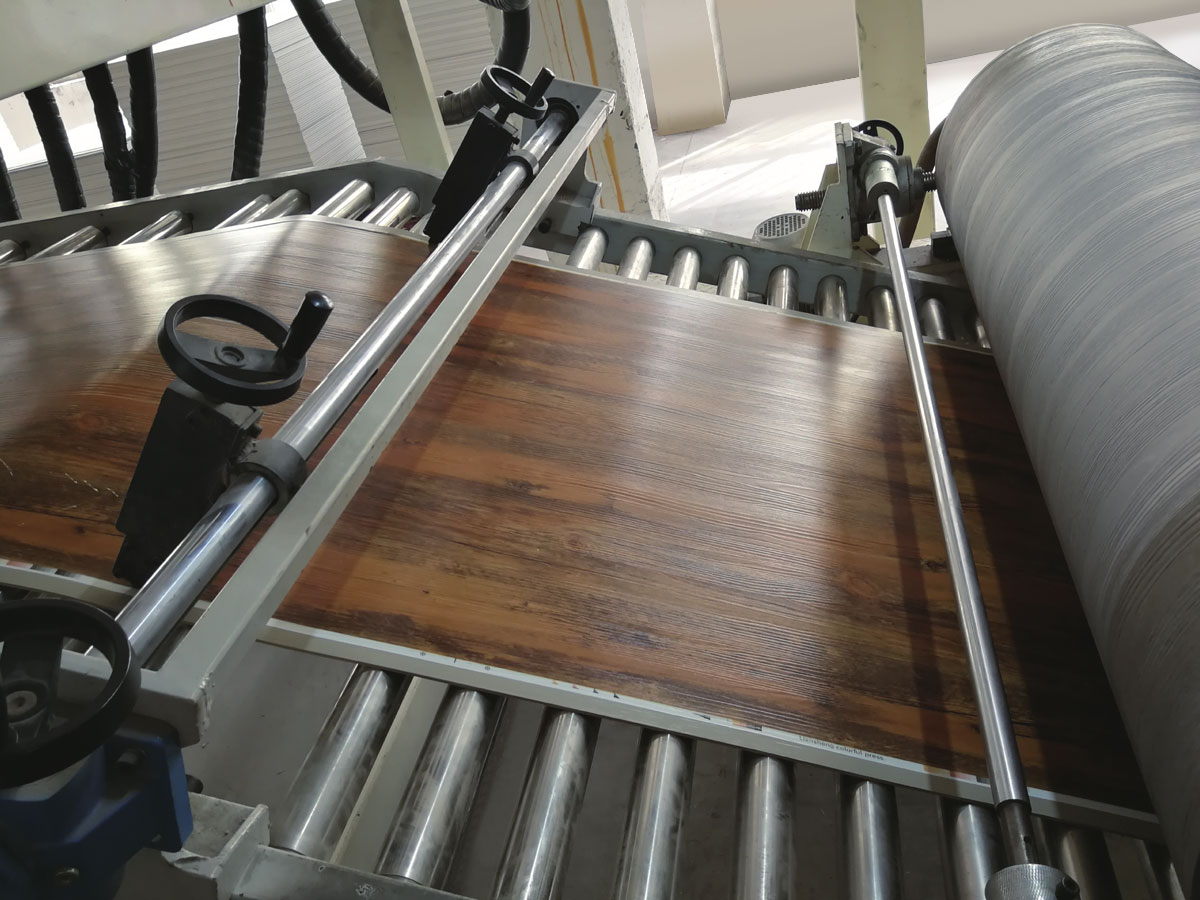
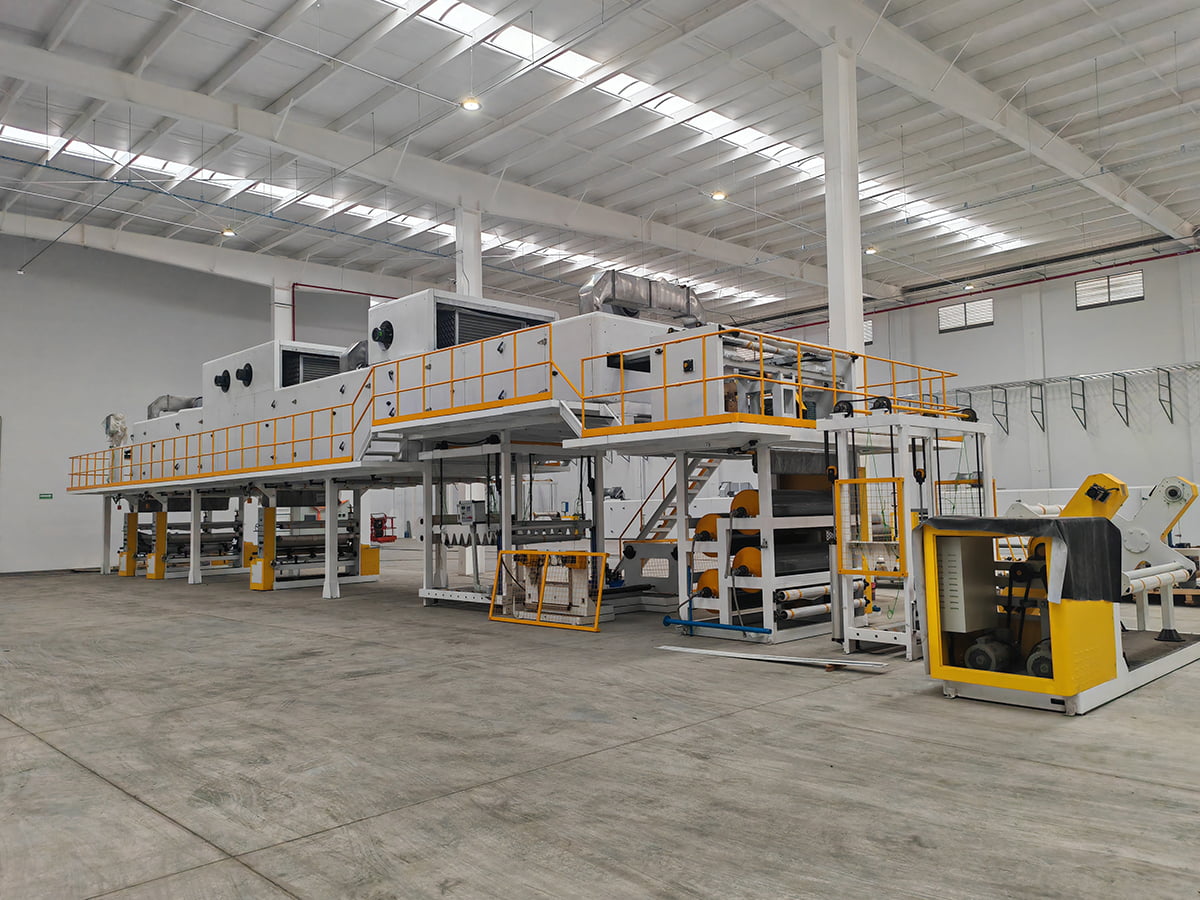
 PET/PP CFRT Composite Material Production LineA CFRT composite line for PET/PP, relevant when extrusion duty must wet out continuous fibre rather than run filled flooring sheet.View Product →
Match the Extruder to Material Behaviour, Not Only to Output
Quotations are usually compared on kilograms per hour. That number is only meaningful when it is quoted for a specific polymer, a specific screw geometry and a specific product thickness. A screw that runs PET comfortably can starve on a filled PVC compound, and a screw optimised for filled compounds can over-shear a heat-sensitive melt.
Points that decide whether the extruder performs
- Feed and drying: PET absorbs moisture and must be dried to a controlled dew point, otherwise hydrolysis shows up as strength loss and bubbles. PP needs far less drying but is more sensitive to melt temperature spikes.
- Screw geometry: compression ratio, barrier sections and mixing elements follow the melt viscosity and the filler load. Ask for the screw drawing, not just the diameter.
- Wear protection: calcium carbonate, glass fibre and mineral fillers are abrasive. Bimetallic barrels and hardened screws extend working life, and the difference appears in gauge consistency two or three years in.
- Pressure stability: a melt pump between extruder and die narrows thickness variation and decouples die pressure from screw speed fluctuations. On thin, high value sheet this is usually worth the investment.
- Die design: a coat hanger die with individually adjustable lips suits wide sheet, while a slot die with tighter internal geometry suits thin coatings. Die width should match finished width plus trim allowance.
Run a trial with your own resin and filler at your target thickness before the order is confirmed. Screw performance on a supplier reference material tells you less than you would like.
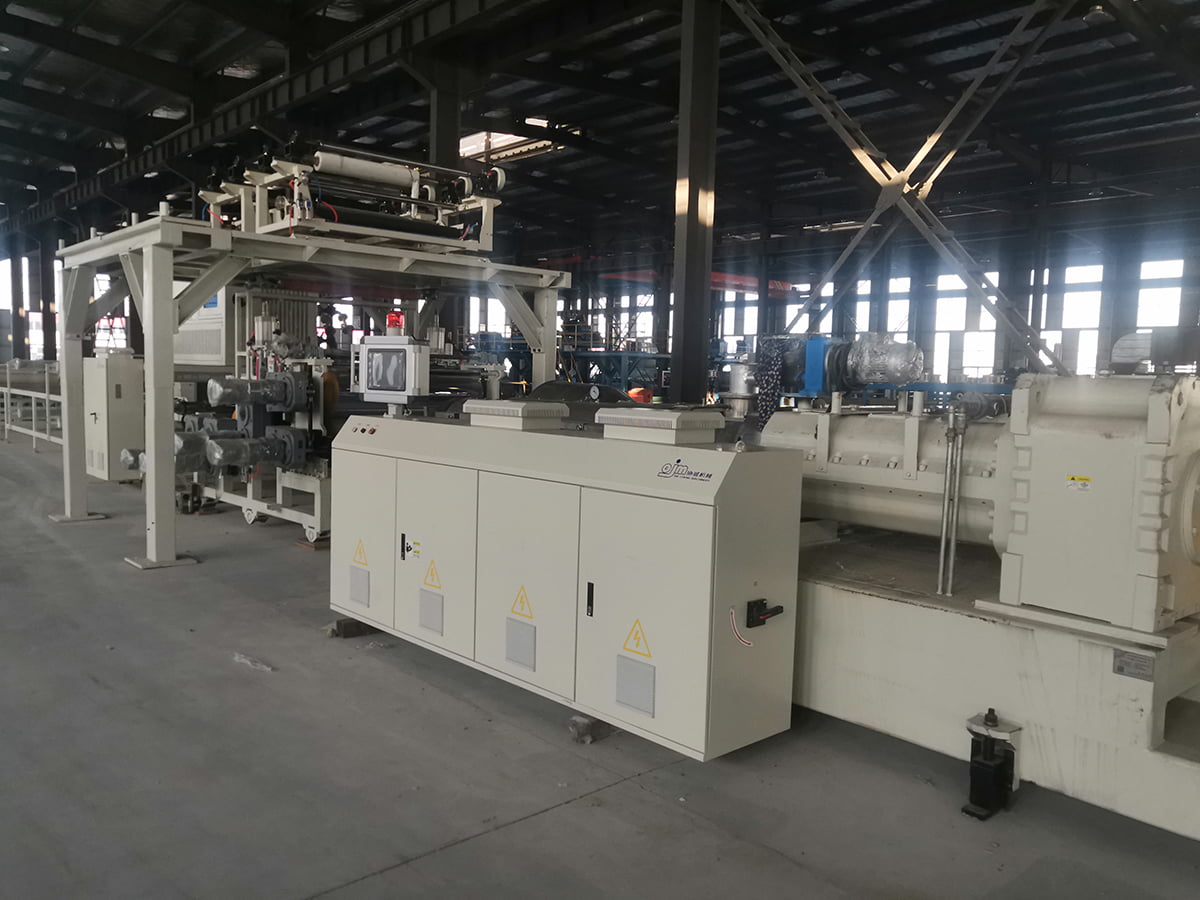 SPC Stone Plastic Flooring Composite Production LineSPC flooring composite line extruding PVC and calcium carbonate core, then laminating film, wear layer and embossing; its gauge control affects material use.View Product →
Tolerances That Decide Material Cost
Thickness tolerance is where extrusion quality turns into money. Take a filled PVC sheet at 1.0 mm nominal gauge and a density of about 1.4 grams per cubic centimetre: one square metre of good sheet weighs roughly 1.4 kg. If the extruder and roll stack hold plus or minus 2 percent, average consumption stays close to nominal. If variation runs at plus or minus 5 percent and operators target the upper half of the band to avoid thin spots, average weight rises by around 3 percent. On 1,000,000 square metres of annual output that is roughly 42 tonnes of extra compound, before resin price, freight and the energy used to melt it.
Variation across the width matters as much as average thickness. A sheet that is on gauge in the centre and thin at both edges forces you to trim wider, and the trimmed material is finished product you cannot sell. Die lip adjustment range, internal flow balance and roll crown are the usual causes, and they are cheapest to correct at the specification stage.
Startup behaviour also carries cost. An extrusion system with fast thermal response and stable pressure control reaches saleable product sooner after a changeover, which reduces scrap on short runs and makes small batch production of special grades commercially reasonable.
Downstream Stages Must Be Sized to the Extruder
The extrusion system sets the pace, but it cannot finish the job alone. A cooling roll stack that removes heat too slowly forces you to slow the line, which raises melt residence time and risks degradation. Lamination nips must be synchronised with haul-off speed so that tension stays constant from the die to the winder, and an in-line thickness gauge is only useful if the control loop can actually adjust screw speed or die bolts fast enough to matter.
For flooring, the embossing and wear layer steps define surface quality and slip resistance, so their temperature control has to be as tight as the extruder's. For PVC and PU leather, coating thickness repeatability and roll temperature stability drive both appearance and material usage, which is why these parameters belong in the acceptance test rather than in a brochure. If you are weighing a flooring or panel project more broadly, it helps to understand what a PVC laminate panel production line involves before fixing extrusion capacity.
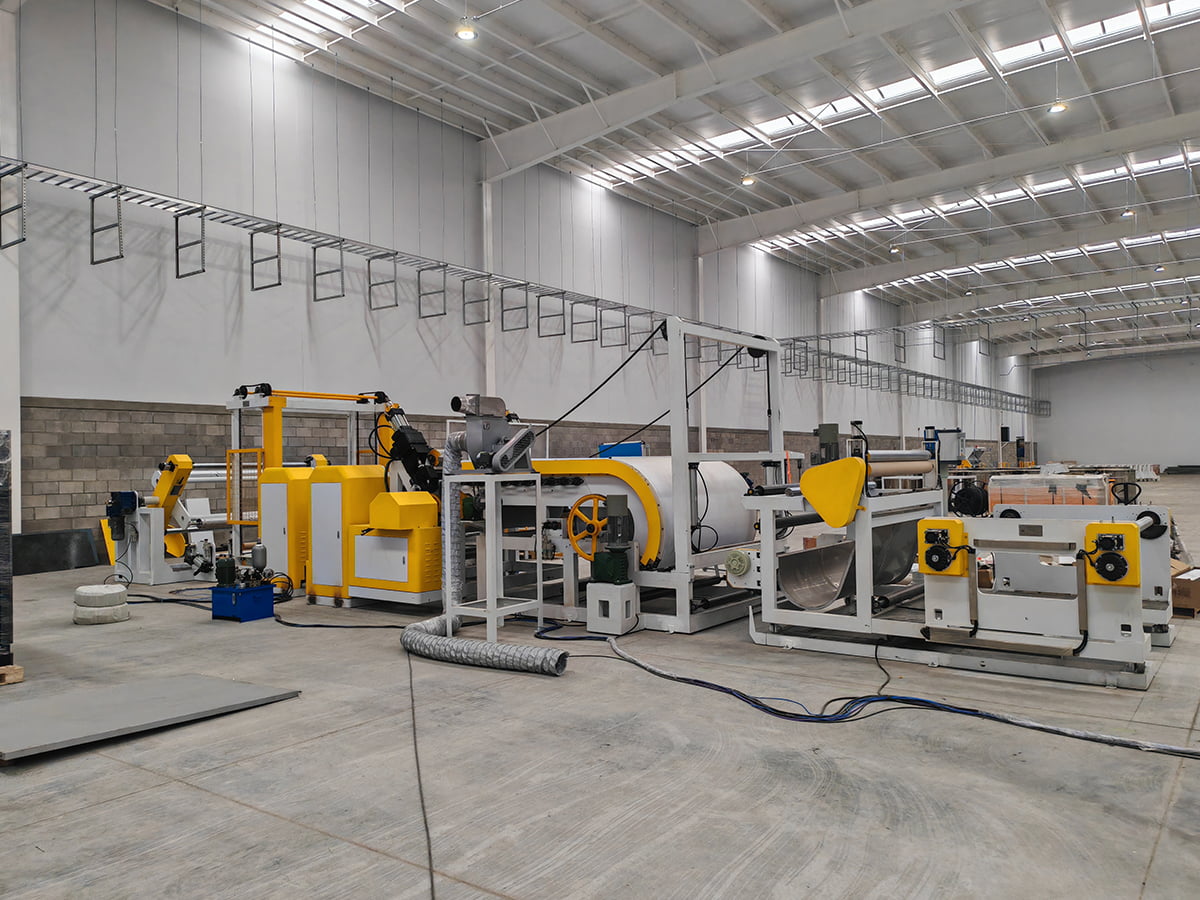 PVC/PU Leather Composite Embossing and Coating LineA PVC/PU leather composite, embossing and coating line relevant when coating thickness repeatability and roll temperature stability must be checked before specification.View Product →
Procurement and Acceptance Checklist
Use the following sequence when specifying a new line or replacing an extruder that no longer holds gauge.
- State the polymer, filler and additive package together with melt flow or viscosity data.
- State finished thickness and its tolerance band, plus width and trim allowance.
- State required output at that thickness and the line speed needed to reach it.
- Request screw and barrel drawings, length to diameter ratio, compression ratio and wear protection.
- Confirm die width, lip adjustment range and internal flow design.
- Confirm cooling capacity and roll stack configuration at maximum line speed.
- Agree a trial with your own material and a sampling plan: thickness across the width, output, energy per kilogram, surface defects and startup scrap rate.
- Agree spare parts scope and lead times for screws, barrels, die lips and roll covers.
- Agree service scope: remote support, on site commissioning, operator training and warranty terms.
Custom Lines, Service and Spare Parts
A standard configuration rarely covers every product. When a customer needs a different layer structure, an unusual width or a dedicated co-extrusion arrangement, a custom built line makes more sense than compromising on a catalogue model. Jiangsu XieCheng Intelligent Equipment, based in the Jinhu Economic Development Zone in Huai'an, Jiangsu, builds both standard and non standard production lines. The group it belongs to has been recognised as a provincial engineering research centre for A2 fire rated aluminium composite panels and their production equipment, and as an AA grade quality credit enterprise, which is useful context when you are assessing engineering depth rather than price alone.
After delivery, support matters more than a specification sheet. Remote assistance, on site service and spare parts supply keep a line running when a screw wears or a die lip needs replacement, and those response times should be written into the contract. You can reach the engineering team through the contact page with your material data, target thickness and required output.
Extrusion systems reward early decisions. Choose screw, die, pressure control and cooling capacity against the material you actually run and the tolerance your customers actually accept, then size lamination, embossing and winding to match. That sequence keeps capital cost tied to usable output instead of brochure numbers, and it makes gauge, scrap and material consumption predictable from the first production shift.